Freelance writers are a dime a dozen, but only a few actually deliver quality content, especially with the rise of AI slop. As someone who’s been writing for brands and agencies since 2019—and hiring writers too—I’ve seen this play out firsthand.
That’s why I’ve compiled 8 places to hire freelance writers online: to prevent wasted marketing spend and help you find freelancers with real depth, not the “perfect portfolio, poor performance” types. So whether your freelance writing job involves ghostwriting, copywriting, blogging, or technical writing, this guide is for you.
To make this as practical as possible, I’ve also included insights from 8 experienced content leaders: Bree Recker, Aleksandra Beka Jovičić, Belinda Roozemond, Rease Rios, Krista Walsh, Robert Beames, Pat Ahern, and Meredith Lee Brown.
But first, here’s the TL;DR:
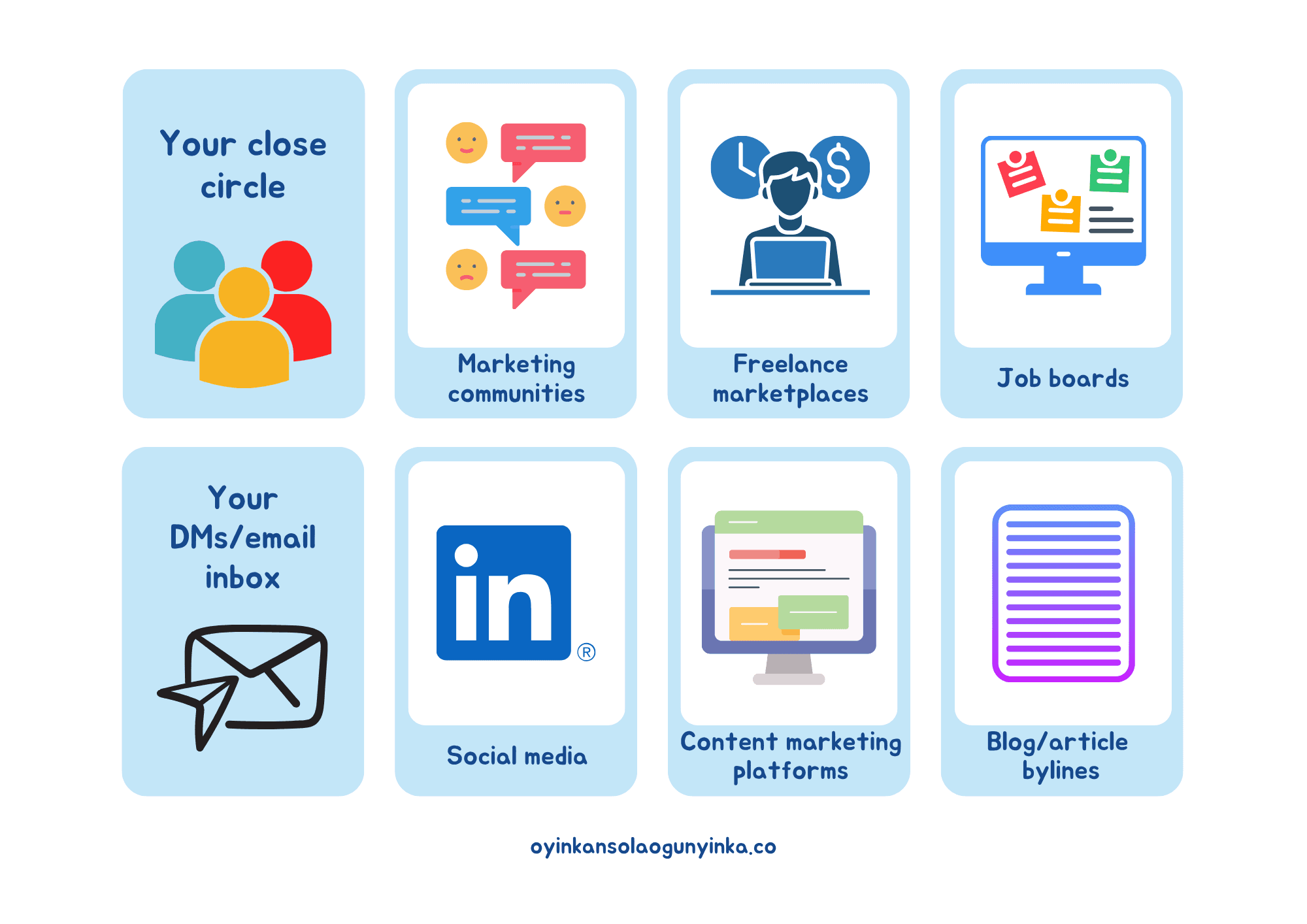
Where to hire freelance writers in 2026: 8 best places + expert insights
Hire freelance writers | Examples | Best for | How to go about it | Hiring cost (not writer rates) |
Your close circle | Friends, family, colleagues | Finding trustworthy writers quickly and stress-free | Ask for referrals, intros, or recommendations | $0 |
Your DMs/email inbox | Your official email inbox | Content leaders who are well-known or vocal online | Respond to outreach or contact past applicants | $0 |
Marketing communities | Superpath, Exit Five, Peak Freelance | Attracting niche writers and a manageable no. of applicants | Post project details + how to apply in the right channel | $0 to $50/month average membership fee |
Social media | LinkedIn, X, Instagram | If you already quietly observe or create content on social media | Promote your gig or message prospects directly | $0 or any applicable paid ad fees |
Freelance marketplaces | Upwork, Fiverr, Contra | Brands and agencies that want wide talent pools with fierce competition | List your gig and filter applicant bids | Varying user, contract initiation, and transaction fees |
Content marketing platforms | Contently, Scripted, WriterAccess | Enterprises, agencies, and media publishers seeking end-to-end content ops support, including writer hiring | Subscription to a plan that covers your preferred services | $0 to thousands of dollars, depending on the platform |
Job boards | Problogger, freelancewriting.com, Craigslist | Getting many applicants without the overwhelm and fees of marketplaces | Publish your job and shortlist candidates | $0 to $100/job post on average |
Blog/article bylines | Top brand blogs like Buffer, Circle, or Semrush | Hiring writers whose work you already love | Review and contact the writers of your favorite articles | $0 |
Whatever you decide, here are the key things most content leaders I interviewed agree on:
Specialized platforms and rigorous vetting processes can help you evaluate writers and hire the right person.
Paid test projects help you better assess a prospect’s writing, time management, and collaboration skills before signing on the dotted line.
Referrals are the best, most reliable way to hire freelance writers who are worth their buck.
Ps: If you’re a writer reading this to boost your freelance career, simply reverse-engineer this list and become visible across as many of the channels as possible. Also, be persistent (not a pest, though) and proactive about finding clients. You’re welcome!
The full breakdown 👇
Hire freelance writers via networks
1. Your close circle
Best for: Finding trustworthy writers quickly and stress-free
Ask your friends, family, or professional connections for referrals, intros, and recommendations. Or, reach out to folks you’ve worked with before. The result? High-quality writers who have been tested and proven, so you don’t have to worry about the standard of their work.
I can’t count the number of freelance writing jobs I’ve gotten that started from a simple intro or recommendation (okay, maybe I can, but I won’t. The point is, they’re a lot). For example, when an old employer restructured and shifted most of its workforce to freelancers a few years ago, I got a head start on securing freelance clients through a referral from an ex-colleague.
I’ve also connected a number of my connections to qualified talent for various gigs, from social media management to design, publishing, and content writing. The point? Ask your people for help. Trust me, they know someone or someone who knows someone. I promise that last sentence makes sense, just re-read it one or two more times. 🙈
Bree Recker, Content Specialist at Skale, describes her experience sourcing writers within her network:
“I’ve usually had a good experience with referrals from people I already work with, like other freelancers. They’re kind of putting themselves on the line, so the quality often tends to be high. No one is going to refer a colleague unless they’re confident that they do good work.”
Freelance B2B SaaS content marketer Aleksandra Beka Jovičić shares similar sentiments:
“When I’m looking for freelance writers, I’ll first hit up others who work or have worked for the same clients as me. Knowing they can meet specific clients’ expectations reassures me that they can deliver on my project, too.”
Belinda Roozemond, a senior content writer and strategist, also highlights consistency of quality as a reason she only hires via referrals from her network. However, she adds some pre-AI consideration to her vetting process. In her exact words:
“I prefer hiring someone who was writing before AI existed. I want a writer who understands what it means to actually write vs manage a tool. Sure, they can use AI to help with processes, but I love hiring people who love to write because you can see it when you read the final piece.”
Pros:
Skips the search hassle completely
A writer someone vouches for is usually more responsible and eager to please (to avoid burnt bridges)
Saves time and hiring resources
Cons:
Limits your options
Depending on context, referred writers may be great in one area but weak in another
Negotiating rates or firing a poor performer can be difficult (due to your relationship with the referrer)
2. Your DMs or email inbox
Best for: Content leaders who are well-known or vocal online (because freelance writers will naturally gravitate towards pitching their services to you)
I know, I know. You probably get tons of DMs and emails a week, and the last thing you want is to start sifting through cold messages to find the diamond in the rough. But trust me when I say, sometimes, it’s worth it.
If you’re relatively lowkey online and only get a few messages occasionally, even better. This way, it’s easy to pop in, find relevant chats, and respond accordingly. If you’ve also posted freelance writing openings before, you can reconsider people you’ve hired before or past applicants you didn’t get to work with earlier.
Seriously. I once had a freelance employer that only closed after I applied to work there a second time via LinkedIn DMs. I can imagine what you’re thinking, and yes, I didn’t make the cut on my first try; it happens. Fun fact: We only worked together briefly, but he introduced me to a client I have now written for on and off since 2024. So yes, a win is a win.
I also got the biggest client of my freelance writing career [name redacted, hehe 🌚] in 2025 by simply following up on an inbound lead from the year before. Imagine the client had checked her LinkedIn DMs and continued our conversation before I followed up, we’d have started collaborating much earlier.
So yes, do with this information what you will. Ideally, that should be minimizing this tab and scouring your DMs and emails ASAP. You just might find what you’re looking for. And even if you don’t, store this tip in your back pocket for the next time you’re hiring.
For Content Strategy Lead Rease Rios, her go-tos are always trusted referrals or inherited freelancers (i.e., those already working with the company before she joined). However, she’s also occasionally considered cold outreaches. Here’s her take:
“I have responded to some cold outreach from subject matter experts. However, I like to do one paid test article, or something smaller like a paid outline. The issue is that most companies don’t want to approve a paid test unless they’re sure the freelancer will stick around.”
And despite seeing some success with them, Rease has also found that cold outreach freelancers rarely end up staying long-term as compared to referrals. So there’s always that possibility.
Aleksandra’s approach is a bit different. Beyond starting with writers who’ve worked for the same clients as her, she tends to look inwards. In her words:
“I’ve now worked with 20+ freelance writers, so most new projects start with checking my roster first.”
Pros:
No need to put out a public call for applicants if you find someone in your DMs or email inbox
If you find a candidate who’s already agreed to a past rate before, they may not renegotiate
Time and cost-effective
Cons:
Some writers are great at pitching but poor at actual execution (paid tests can help filter for this, though)
Doesn’t really work without a decent internet presence
Flight risk if you hire a candidate that pitched you (vs referred writers or past colleagues with existing relationships to preserve)
3. Marketing communities
Best for: Clients who need niche writers (like B2B SaaS pros) and a manageable number of applicants
Marketing communities are a goldmine for discovering good freelance writers, and there are so many awesome ones. All you have to do is post your requirements and how to apply on the dedicated jobs or hiring space, then filter through the applicants you get.
Here are my top recommendations:
Superpath: Slack community for content marketers (full-time, agency, and freelance); costs $50/month or $500/year; 300+ members
Exit Five (E5): Circle-hosted community for marketing professionals and leaders; pricing starts at $49/month; 5,000+ members
Peak Freelance: Free Slack community for freelance writers; 1,000+ members
Freelance Coalition for Developing Countries: Free Slack community for BIPOC freelancers; 4,000+ members
Freelancing Females: Mighty Networks-hosted community for female freelancers (including writers); pricing starts at $33/month; 300,000+ members
And before you ask—yes, I’m a member of all the communities above, and they’ve helped me land high-intent leads and gigs, generating over $5k in freelance writing income (and counting).
Some others that might be worth checking out include Top of the Funnel (TOFU), The H Spot Writer’s Community, The SEO Community, dslx campus, and Smarketers Hub.
While Bree hasn’t tried hiring from communities before, her thoughts on the technique are positive:
“I would be more eager to hire someone that I’ve seen in conversations in a writer’s community than a stranger on a job board.”
Meanwhile, copywriting expert Krista Walsh, uses a combo of referrals and community. Her words:
"The best writers I've hired I found through reaching out to copywriting-specific community leaders to point me in the direction of their best and brightest students. Like Copyhackers or Copywrite Matters. I'd say the same applies to any type of writer you're looking to hire!"
Pros:
Gives access to a managed community of experienced writers
Costs little to nothing to post jobs
Lets you interact with other content and marketing leaders (for networking and knowledge-sharing)
Cons:
An overwhelming number of applicants to sift through
No organized member vetting process or way to vouch for the quality of writers
Job/gig seekers might spam your DMs with pitches and follow-ups
4. Social media
Best for: Hiring managers who already quietly observe or create content on social media
LinkedIn is the OG professional social network for hiring top talent from anywhere in the world—including writers. But it’s not the only one. You can also find great writers on Twitter (X), Instagram, and local Facebook Groups.
Many skilled writers, like me, outline their specialities in their social profiles. Simply follow the ones that pique your interest and check out their posts, comments, or landing pages/portfolios to see if they’re a fit. You
I’ve gotten some of my best gigs—writing for Circle, Career Masterclass, and Daleel—from inbound leads (and direct applications) in LinkedIn DMs. I’ve also entertained a few prospect conversations on Instagram, though only one has closed.
My boyfriend (now husband) even helped me secure a part-time gig—that paid more than my day job in 2022—from an opening posted on Twitter. The client asked applicants or referrers to send relevant portfolios, my man did his thing, and the rest is history!
The lesson? Post your writing gig on social media (personal or business accounts). Qualified candidates will reach out, and you will find them, once you sieve the unqualified ones (sorry, no escaping this part, lol).
Alternatively, search keywords like “SEO writer”, “B2B SaaS writer”, or whatever describes the kind of writer you need, shortlist outstanding profiles, and shoot your shot. I’ve used this method to hire fintech writers from LinkedIn before, and it worked perfectly for me.
Beyond social apps, this strategy also works for search and answer engines like Google and ChatGPT, especially if you add a location, e.g., “legaltech writers in Nigeria”.
Another underexploited hack is to search the profiles of renowned content agencies like Animalz (one of my top clients) or Grow and Convert, and contact their past or current 😈 writers.
Full disclosure: I don’t have any direct experience with Facebook Groups, Reddit, and Quora boards, but I read multiple sources to curate this piece, and many mentioned them. That said, tread with caution to avoid scam jobs or links.
Either way you choose to go, remember the wise words of Robert Beames, Head of Content at Truvi:
“Portfolios are a starting point, not a reliable signal; a paid test piece integrated into your own process tests for compatibility and quality. And when evaluating, I’d back the great writer who’s shown they can do solid research over an industry expert who’s picked up writing on the side. The writing is genuinely the harder skill to find.”
Pros:
Not as congested as the others, especially if you DM prospective candidates vs making a job post
No fixed price or platform fees, so you can share your budget and see if it works right off the bat, or negotiate rates till you’re satisfied
Great for finding niche writers, e.g., crypto, web3, health, finance, B2B SaaS, etc.
Cons:
An excessive number of applicants if you post the gig publicly
Your budget may not always work for the top candidates on your shortlist (aka, they charge higher than you intend to spend)
Some candidates have well-curated feeds/profiles and portfolios, but their actual output quality is poor, and you may only find out after sinking money into recruiting them
Hire freelance writers via sites
5. Freelance marketplaces
Best for: Brands and agencies that want wide talent pools with fierce competition
You can find and hire great writing talent on traditional freelance marketplaces like Upwork and Fiverr. However, you may need to pay fees of 3 to 10% on payments made, contract initiation charges for projects you hire/pay for on the platform, and extra costs for a premium account.
Freelancers also have to part ways with anything from 0 to 15% of their earnings on the platform. I’ve tried both platforms with little success due to heavy competition for limited jobs, but I have had one UK-based client (Embarque.io)—that I secured elsewhere—pay me via Upwork once or twice. What do I remember most? The high fees. 😭
A more modern alternative is Contra, as it’s completely commission-free. However, it is not as popular or well-established as Upwork and Fiverr. Also, Contra’s minimum bid is $25/hour or $250/project, so it doesn’t have a talent or client pool as wide as either platform.
Note: I recently discovered Freelancer, Guru, TopTal, and PeoplePerHour—newer freelance marketplaces with smaller user bases. Try them quickly before they get oversaturated because once that happens, more good writers will join, but so will low-quality ones.
In the case of Pat Ahern, Managing Partner at Intergrowth, his team has had the most success getting freelance writers (and editors) on Upwork. Here’s the 3-step vetting process they use and recommend for best results:
Short interview: Focused on whether the writer’s soft skills line up with their team (emotional intelligence, hunger to learn, organizational skills).
Paid test project: They pay prospects to write and edit an article for one of their internal brands (not a client brand) with next to no guidance. The goal is to get a sense of their current skills and note questions they ask for additional context.
Onboarding project: They pay finalists to write another internal brand article after having walked them through their process docs. Assuming all goes well after a thorough QA, they bring them onto the team.
I love this approach so much because it’s highly effective for filtering bad-fit candidates and avoiding future regrets.
Pros:
Large talent pools to choose from
Visibility into a writer's profile and expertise before hiring
Financial protection, as platforms typically hold off on paying freelancers till you confirm work receipt
Cons
Overwhelming applications due to fierce competition
Poor quality applicants to sift through if the talent vetting process is weak
Additional costs beyond your budget due to platform fees
6. Content marketing platforms
Best for: Enterprises, agencies, and media publishers seeking end-to-end content operations support, including writer hiring
Content marketing platforms (CMPs) like Contently, Scripted, WriterAccess, and Pepper Content provide vetted writers, tools, and services. They seem similar to freelance marketplaces, but the key difference is that they operate more like agencies or consultancies than directories.
They also sometimes include strategy, analytics, and distribution solutions for end-to-end content workflows. A site like WriterAccess even uses a star rating system to evaluate writer performance and rates, so you can hire accordingly.
If you’re simply looking for a solid writer, though, content marketing platforms can feel quite overwhelming or productized. My advice? It can be hit or miss, but many of these platforms highlight big-name clients, so they must be doing some things right.
I asked Google, and here’s a summary of what the AI mode had to say:
“A content marketing platform acts as a multiplier, not a magic wand. If you provide a weak brief, you’ll get a mediocre, high-volume output. However, if you use them to find specialized, vetted experts for a well-defined project, they are the fastest route from bottleneck to authority.”
Do I agree? With the first half, yes. The other half? Not so much. But ultimately, it’s your call.
Pros:
Include content tools and services beyond just hiring a writer
Rigorous writer vetting
Some plans include done-for-you AI content
Cons:
Fixed prices are non-negotiable, though you can adjust the work scope to match your budget
Steep platform learning curve
Occasional inconsistency with content quality, especially because they don’t all pay writers well (some do, but not all)
7. Job boards
Best for: Getting many applicants without the overwhelm and fees of marketplaces
Many solid writers rely on job boards like Problogger and freelancewriting.com to find high-paying gigs, so they're good places to find freelance writing experts. It costs as low as $80 to post a job on Problogger, while for freelancewriting.com, you’ll need to fill out a contact form to start the writer hiring process.
Then there’s Craigslist, which Desiree Homer of The Pajama Writer describes as a hidden-in-plain-sight source. It’s easy to overlook because of its reputation for sketchy and scam job postings, but some good writers still explore it for opportunities, so it might be worth trying. Craigslist has a presence in about 70 countries worldwide, but it is most popular in the US.
To better understand and review the platform, I tried to access it, but was met with a “your request has been blocked” error message. For context: I’m based in Nigeria, and this might be an isolated issue with my IP address. That said, if you’re hiring from my location or anywhere in the EMEA, you can still try it.
Another board worth listing your freelance writing gigs on is Make Writing Your Job (a large network of writers subscribe to the Substack, and it costs just $29 per job post).
Here’s what Bree has to say about job boards:
“Even when you find talent on a job board, start with a trial article or two. It should be fully paid, of course, but it allows you to really scope out the person’s work. You don’t know how heavily sample and portfolio articles have been edited. This also gives the freelancer a chance to gauge whether your project is a good fit for them (before either of you overcommit).”
Pros:
Amplify your job opening on a wider platform
Free/low-cost way to get qualified applicants
Quick hiring process due to a high number of applicants within a short time
Cons:
Highly-skilled writers don’t always trust opportunities on generic freelance writing job boards
Getting applicants long after you hire someone (if the board doesn’t take down your opening)
Some job boards have a bad reputation for scams or lower-paying jobs
8. Blog/article bylines
Best for: Hiring freelance writers whose work you already love
Many blogs and articles include short author bios so you can read up on them and explore more of their work. Check the bylines on your favorite sites, and reach out to them to write for you. They just might be available and aligned with your budget.
For example, a technical writer from your favorite engineering blog could be your next hire, as long as the publication isn’t your direct competitor.
Several people have reached out to gush about my work in the wild over the years, and I’ve done the same for others whose pieces I admire. So if I ever got in a position to hire writers again and someone catches my eye, this’d likely be one of my go-to practices.
For Communications specialist Meredith Lee Brown, her first option is to seek referrals. However, blog/article bylines are also in her freelance writer hiring toolbox. Here’s what she suggests:
“Think about the kind of writer you're looking for. Do you need a journalist, a travel writer, or a long-form author? Perhaps a content marketer, a climate storyteller, or a technical writer? Then, look around. Think about which publications your ideal hire would work for and review their list of contributors. Likely, you'll be able to find the writer's contact information in their byline, or they may have a website. From there, just reach out!”
Similarly, Ray Slater Berry, founder and CEO of dslx, shared that his team's biggest freelance writer hiring success story started from her byline on a client's blog:
"We found [redacted] from her byline on a client's blog. We loved her work and thought we'd love to work with her more. We onboarded that client, and started working with her, and today, she's a full time senior writer and editor at dslx!"
What a story!
Pros:
You don’t need to re-assess them or their portfolio because you’ve already seen and fallen in love with their work
Speedy, cost-efficient hiring process
Domain/industry expertise is sure
Cons:
Some pieces were ghostwritten with the byline given to someone else (and it’s nearly impossible to tell)
In-demand writers may have a lot of work on their plate and be unavailable till later
If you hire a writer you like from a different niche to write in another, they may not deliver the level of quality you expect
How to choose the right place to hire freelance content writers
If you want quality/reliability → Referrals and communities
If you want niche expertise → Social media and bylines
If you want speed/volume → Job boards and marketplaces
If you want scale/volume → Content platforms
Want to prevent a winding hiring process or wasted spend?

I wrote this to help you avoid the trial-and-error most teams go through when hiring writers.
But if you’d rather skip the search hassle, I can help you create content that actually performs (vs just sitting pretty)—based on what’s worked for brands I’ve supported since 2019.
I’m open to freelance, fractional, and full-time content roles, so feel free to check out my work and get in touch if there’s a fit.
Cheers!